
Public and Private
Public and private life shape each other. Seeing this can make private experience a source of public agency.
On this page:
|
|
|
|
|
|
The paradox
Public and private life often seem like different worlds. Public life is imagined as “out there” — governments, media, schools, workplaces and health systems. Private life is “in here” — families, friendships, homes and the spaces where we rest and recover.
But the line between them is never clean. Public decisions shape private struggles all the time. If a school cannot make space for your neurodivergent child, that is not just a private problem. It reflects broader public decisions about resources, responsibility and who belongs. Once we see that our lives are entangled with public systems, it becomes easier to see that those systems are not fixed. They can be acted on.
How we understand the boundary between public and private shapes how we see ourselves. We may blame ourselves, feel we are falling short or believe we have to work twice as hard just to get by. Or we may begin to see that our lives are patterned by public forces — and that this gives us grounds not just for frustration, but for action.
When we step back and see how our private lives have been shaped by public life — through education, health care, migration and work in our lives and in the experience of our families — we can see more clearly what has shaped us, and why we want to make a difference.
The shape of the paradox:
Public and private are distinct — but never separate.

What needs rethinking?
The task is not to choose between public and private, but to see how they shape one another. Private pain is often patterned by public decisions. Public action is often rooted in private experience. Thinking differently means resisting both self-blame and fatalism: seeing clearly what is structural, while also recognising where we can act.
We can reduce public pressures to private burdens. We blame ourselves for struggling under conditions we did not create, for not coping better, working harder, or being more resilient. When this happens, self-help or a commitment to “just work harder” can become the answer to problems shaped by schools, workplaces, governments and institutions.
But private coping cannot resolve public problems. When we treat public pressures as our private responsibility, we misread what is happening to us and shrink our sense of what might be possible. We feel powerless not only because the pressures are real, but because we have been taught to carry them alone.
This trap moves in the opposite direction. It sees the force of systems clearly, but in doing so can flatten the role of personal life, relationships and choice. Everything is explained by structures, institutions and power, until individual action seems small or pointless.
The risk here is fatalism: if the system is broken, then nothing we do can matter. This can feed a politics of permanent outrage — always diagnosing what is wrong, but unable to find a grounded, relational or sustained way to act.
Seeing the public dimensions of our lives matters. But when we lose sight of the private, relational and personal dimensions of action, critique can turn into paralysis.
Connections across the map

Big and small
Big public systems shape our lives in ways that are often felt at a small, private scale: in everyday relationships, care, and struggle.

Us and Others
Sharing private experiences with others can reveal public patterns; tribes give us a way to act together to challenge the pressures behind them.

Power Over and Power With
Power dynamics in public life shape the pressures we face privately; by connecting those experiences with others, people can build the power to contest them.
Curiosity and Judgement
Public expectation and private experience shape the stories we carry; holding our judgements with curiosity shapes how we relate to ourselves and others.

Sameness and Difference
Private lives reveal endless differences; public life shapes which differences are recognised, accommodated or marginalised. Finding enough sameness across private experience and unequal public treatment creates the basis for acting together.

Action and Reflection
Private experience can become a starting point for reflection on what calls us to act; public life is where that reflection can become shared action.
Acting consciously
Public and private are distinct, but inseparable. The task is to hold them together without treating them as the same. When we separate them too sharply, we carry public pressures as private burdens and feel powerless. When we collapse them into one another, we can lose boundaries, accountability and strategy.
Acting consciously here means noticing where private experience is being shaped by public forces. It means asking what rules, norms, incentives or institutional decisions sit behind what feels personal. How we interpret this relationship matters. It shapes whether we see ourselves as failures, as powerless, or as participants in a wider story. Seeing these connections can turn shame into analysis, and analysis into agency.
Public and private do not only shape the problems we face; they also shape our sense of what matters, who we want to be, and where we believe things need to change. Acting consciously means paying attention to how public life has influenced the opportunities, challenges and experiences across your life — helping to form what you care about, what you are curious about, what is harder for you to see, and what calls you to act.
This way of thinking becomes practical when we name what is public in the situation, find others living the same pattern, and identify a lever for change. What first feels isolated can become shared. What feels fixed can become contestable. Action might involve policy, employer practice, school norms, transport standards, or another part of public life that can be influenced.
Sara Bryon: From Private Shame to Public Action
Sara Bryon’s story shows that public and private are not separate worlds, but ways of understanding how our lives are shaped.
Questions to sit with
Sitting in the tension
- How do public and private help you name both pressure and agency?
- What feels useful about linking public and private? What feels difficult, missing or confronting?
- Like the example of mental health, where else might the boundary between public and private need to be redrawn?
- How does the distinction between private forgiveness and public accountability reshape how you see behaviour in public life — in politics, at work, or in your tribe?
Navigating public and private in your practice
- What are you treating as private failure that may actually be shaped by wider public forces?
- How have public forces shown up across your life, or the lives of those you love? What do those experiences reveal about what matters to you?
- Are there private struggles in your life, or among others in your tribe, that might point to a shared public pattern? Is there a public lever that could make a difference?
From the book
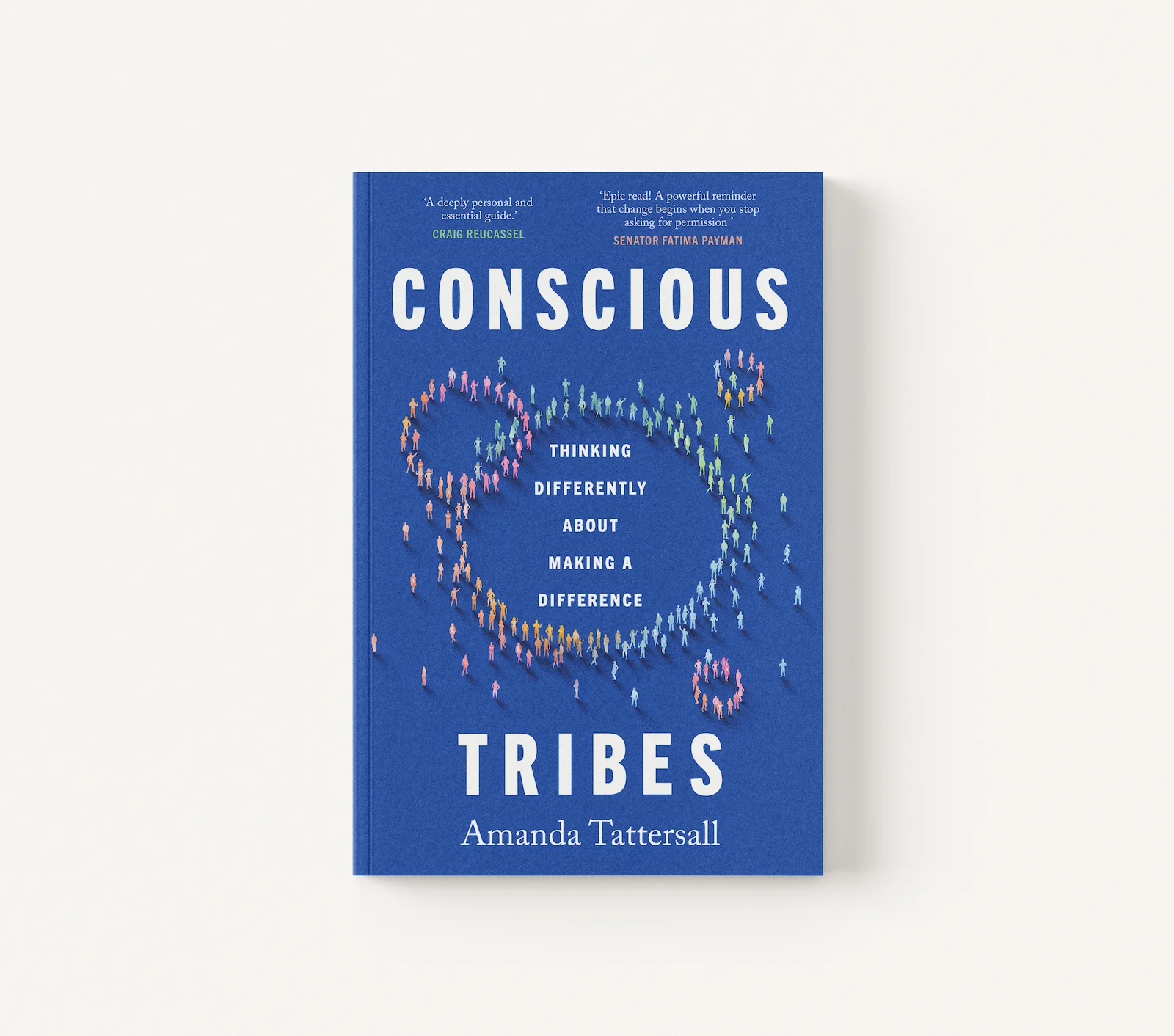
“We can think differently about what is possible when we are conscious of the connection between our public and private lives. When we see public life as separate from us, it looks static and abstract – dressed up as big, immutable institutions like the education or healthcare system. But the paradox of public and private helps us appreciate that public life isn’t just something ‘out there’; it’s part of how we live our lives. There might be a big education system, but we also send our kids to the local school. Seeing how our lives are part of, not separate from, public life makes it easier to recognise that even ‘big’ public institutions aren’t really fixed – they’re evolving all the time. If public life changes all the time and we are part of that system, then it’s possible – even if it’s not easy – to see how seemingly small people like us have the ability to change public life.”
Putting it into practice

Making a difference starts with me and my story: my political autobiography
Reflecting on what I care about and why.

From Private Pain to Public Action: Listening Circle Guide
Lorem ipsum is placeholder text commonly used in the graphic, print, and publishing industries for previewing layouts and visual mockups.