
Curiosity and Judgement
Curiosity helps us stay open to others; judgement helps us decide what we stand for and how to act.
On this page:
|
|
|
|
|
|

The paradox
Curiosity and judgement shape how we work with others. Curiosity helps us listen and learn; judgement helps us hold on to who we are, what we value, and what we are prepared to stand for.
They are often treated as opposites: curiosity as generous and expansive; judgement as hard or closed. But in public life, we need both. Without curiosity, judgement can become rigid or self-righteous. Without judgement, curiosity can become endless questioning that stops us from taking a stand or acting with conviction.
The challenge is to hold them together so we stay in relationship even when we disagree. Sometimes that means making space for curiosity before judgement hardens. As the Zapatista practice of “walking while asking questions” suggests, we can bring curiosity to what we do without collapsing into others or abandoning what we stand for.
The shape of the paradox:
Curiosity opens us to others; judgement keeps us grounded in what we value.

What needs rethinking?
Rethinking curiosity and judgement means seeing them as connected practices, not competing virtues. Held together, they allow us to disagree while still relating: open enough to learn from others, clear enough not to disappear into them. Disagreement does not have to mean disconnection.
Judgement is necessary, but when it hardens too quickly it can close us off or make us self-righteous. We can mistake our first reaction for the whole truth, reducing people to positions, labels or mistakes. Our tribes can become more interested in proving we are right than understanding what is really going on. When judgement loses touch with curiosity, it narrows who we are willing to work with, how we build power, and what we remain able to learn.
Curiosity sounds worthy, and we can assume it is always better to stay curious and suspend judgement. But curiosity without judgement can let us take comfort in inquiry when the moment calls for commitment. Listening, exploring and understanding do not lead to change unless we also decide what matters and what we are prepared to do. Curiosity without judgement can leave us hiding who we are, what we value and what we stand for. The answer is not to pretend we have no judgements, but to become more conscious of how we hold them as we relate.
We can treat curiosity and judgement as if they belong in a fixed sequence: curiosity first, judgement later. We listen, learn and suspend judgement for a while, then set curiosity aside having decided what we think or what to do. Sometimes this sequence is useful. But separating them too neatly can leave us unconscious of how they are still connected. What we are curious about — what we notice, pursue or avoid — is shaped by our judgements. And our judgements are hardened, sharpened or softened by the quality of our curiosity. The challenge is to keep them in relationship: staying curious while we judge, and judging in ways that remain open to learning.
Connections across the map

Big and small
Curiosity and judgement help us relate across larger power dynamics without disconnecting, while staying open to being changed in relationship.

Public and private
Curiosity helps us notice how public life shapes private lives; judgement helps us decide when those experiences and pressures call us to action.

Us and Others
A tribe’s sense of sameness creates boundaries; curiosity helps those boundaries stay responsive to what is changing inside and outside the tribe.

Power Over and Power With
Curiosity helps us build power with others without pretending our judgements are neutral or untouched by power.

Sameness and Difference
We make judgements about who we build sameness with; curiosity helps sameness remain open to difference.

Action and Reflection
Judgement makes action possible; curiosity deepens reflection, making space to learn from disagreement, failure and unintended consequences.
Acting consciously
Curiosity is not just a tactic for difficult conversations. It is a discipline: a way of being in relationship with others. Practised well, curiosity means being willing to think, I might be wrong. It means treating another person’s view as information rather than threat, listening for what people care about rather than just what they say they believe, and asking questions that reveal experience, pressure, interests and meaning. It also means placing ourselves in spaces, relationships and conversations that are new or uncomfortable, and building the emotional discipline to manage defensiveness, discomfort and fear.
Judgement is unavoidable in public life. It gives shape to commitment: clarifying who we are, who we are not, what we value and what we will do. Tribes make judgements too, and those judgements shape their boundaries and purpose.
Taking judgement seriously means owning that we have judgements, not pretending we are above them. It also means recognising that our judgements reveal our limits as well as our convictions. Our judgements are embodied, shaped by experience, and affected by public life’s assumptions about what is good and bad, right or wrong, normal or unacceptable.
Curiosity interrupts that certainty. It tests our judgements against lived experience, relationship and action, so they can be challenged, deepened and changed over time. Held alongside curiosity, judgement becomes a boundary rather than a weapon.
Strong action is built on relationships, but not all relationships can hold and navigate disagreement.
We can relate in ways that distort both curiosity and judgement: hiding where we stand, asking endless questions to avoid discomfort, or pandering in the name of protecting the relationship. Or we may move too quickly in the other direction — rejecting, arguing down or avoiding someone as soon as they unsettle us.
Acting consciously means learning how to stay in relationship without requiring agreement, and without pretending that power is absent. Disagreement is often shaped by status, history, institutions, trauma and unequal power. Relationships do not magically overcome these dynamics, but nor do power dynamics completely determine what a relationship can become. Clear practices help: who decides what, where responsibility sits, how accountability works, and how the relationship remains open to challenge and change.
Relating while disagreeing does not mean we will always be persuaded by others. The deeper point is that disagreement can make space for us, and our tribes, to be changed. We encounter something outside our own frame, test it against what we already know, and develop new meaning in the space between.
This matters for tribes as much as individuals. Tribes can become judgemental about success and defensive about failure, pretending everything is working rather than becoming curious about what did not. A conscious tribe can “walk while asking questions” — naming failure without becoming defensive, staying curious about what happened, and acting with greater clarity.

Kisê-Pîsim and the Word Tribe
Curiosity does not remove power from a relationship; it makes power something we have to notice.
Questions to sit with
Sitting in the tension
- When do you find yourself more able to be curious, and when is it harder?
- Can you think of a judgement you hold that has shifted over time? What helped it change?
- What would it mean to stay in relationship without agreement?
- What do you make of the idea that power dynamics are present in our relationships, but do not completely determine how those relationships work?
Navigating curiosity and judgement in your practice
- When you encounter conflict or disagreement, do you tend to move toward the relationship or away from it?
- Where do you close down curiosity too quickly?
- Where might curiosity be helping you avoid taking a stand or acting with conviction?
- What practices help you stay open to others while still holding yourself?
- How does your tribe usually respond to conflict or disagreement? After a difficult meeting, what happens next: repair, reflection, avoidance, blame or learning?
- What would help your tribe hold disagreement without pretending power, history or difference do not matter?
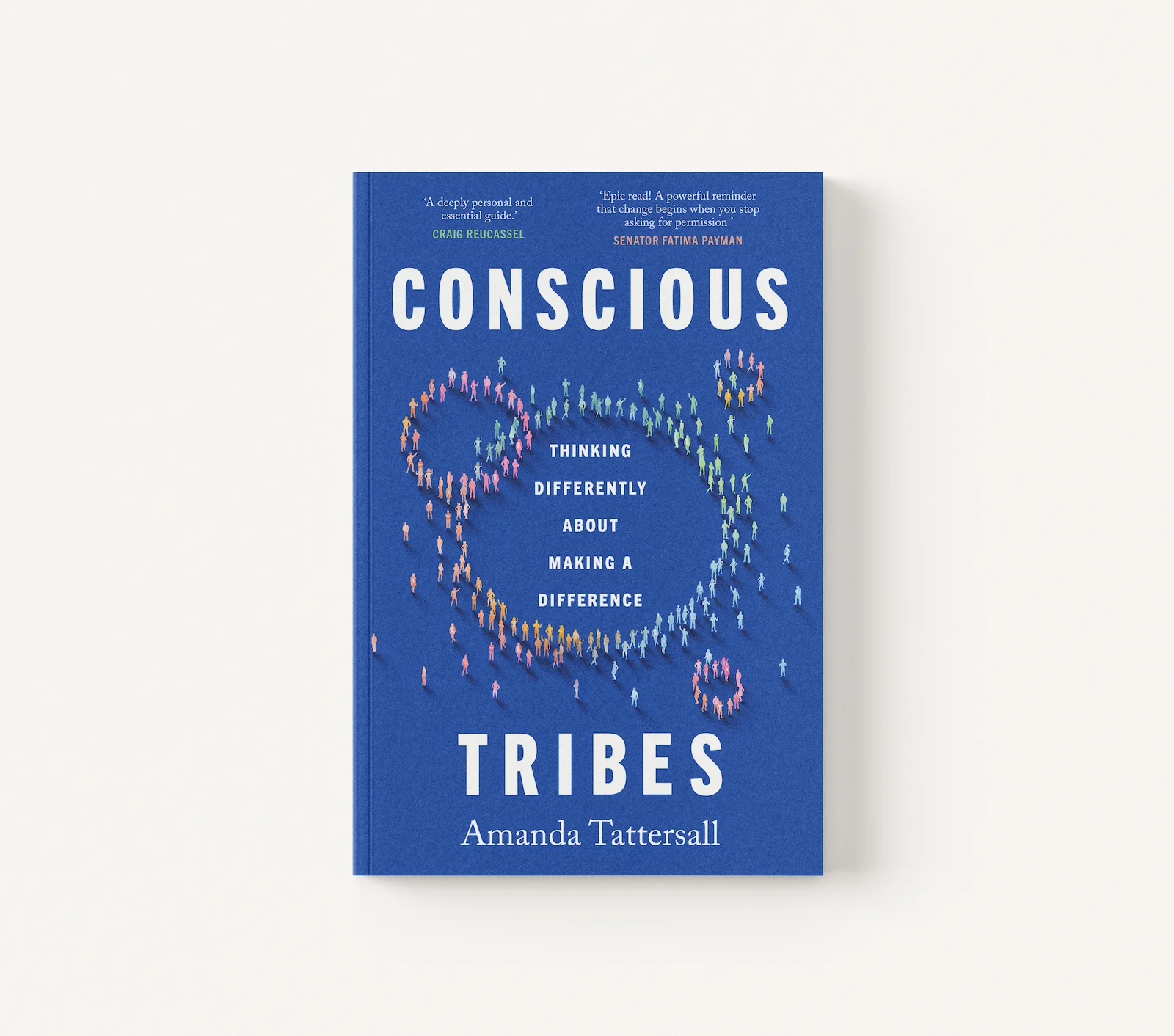
From the book
From our very first conversation, Kisê-Pîsim and I sought to navigate these dynamics of relationship and power by forging a connection based on both curiosity and judgement. As Kisê-Pîsim put it, ‘Just because we’re building a bridge doesn’t mean I have to believe or act according to your world, or vice versa.’ She continued: ‘But we can find places that bring commonality, and be respectful of one another, so that we can work together.’ She drew on a lesson from her ancestors: ‘We can meet in places of trading, as we did hundreds of years ago, where we would meet other Nations and trade goods.’
Although our judgements were entangled with power and disagreement, what helped us sustain our relationship was having agreed on clear boundaries around decision-making. In that first meeting, Kisê-Pîsim and I had set our own rules of engagement — including acknowledging that our relationship did not require us to resolve our disagreements. That agreement was essential, because watering down either of our core commitments into a lowest-common-denominator compromise would have put the relationship at risk.
Putting it into practice
Tool TBC
Tool TBC