About Amanda
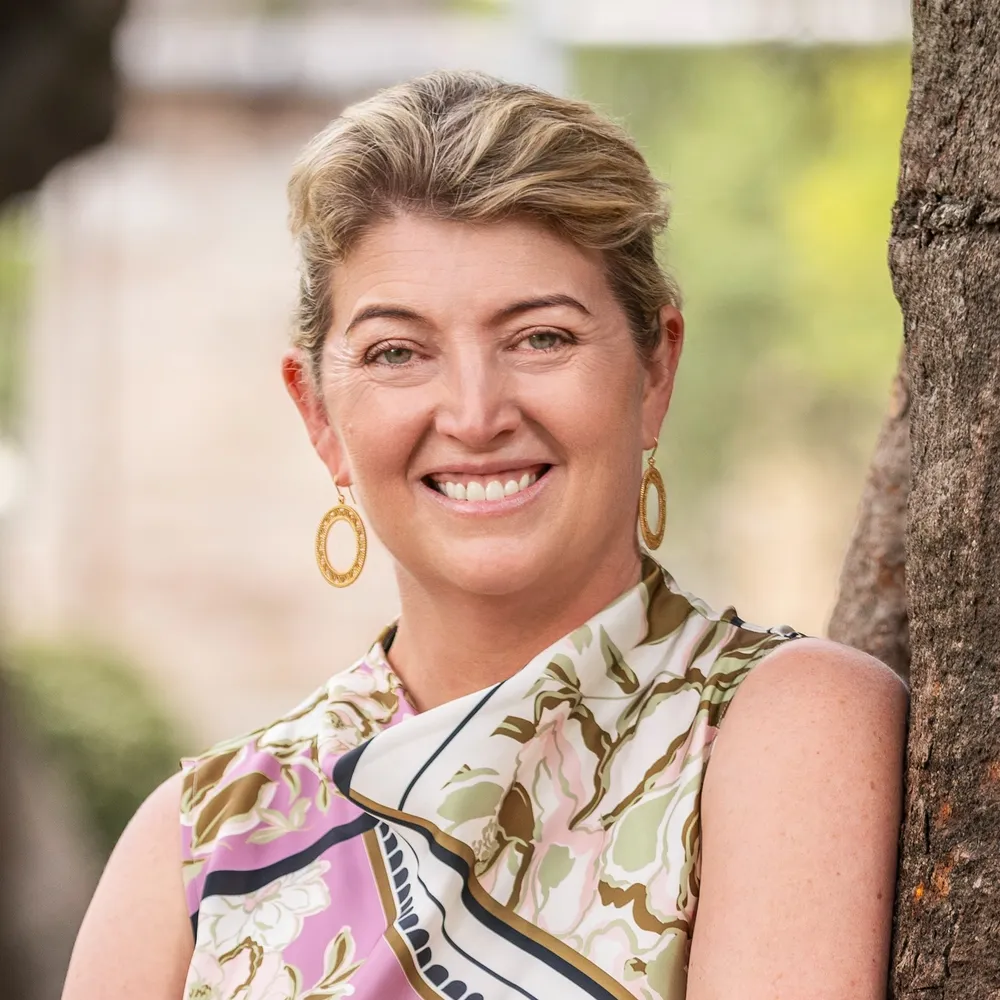
Amanda is a globally recognised Australian change maker who has repeatedly innovated social change strategy using community-engaged research.
Amanda Tattersall is the co-founder of GetUp, the million-member Australian digital campaign organisation, and the founder of the Sydney Alliance, the country’s largest and most diverse community coalition. She is an Associate Professor in urban geography at the University of Sydney, and has spent her career making and researching the art of social change in Australia and across the world.
She has been active on issues as diverse as climate change, workplace rights, peace, mental health, housing and education. Her previous books include Power in Coalition (2010) and People Power in Cities (2026). She is the host of the ChangeMakers Podcast, which is now in its tenth season and has had over 2 million downloads.

Why I wrote this book
By Amanda
My short biography, like most quippy summaries, doesn’t hint at the most important part of my story: the bigger reason behind why I have pursued a life making change and why I wanted to write this book.
I live with bipolar. At 19 I had a psychosis and was hospitalised for several months. It was a difficult experience that taught me about the fragility of life at a time when my adult life had only just begun. I chose to make whatever life I had matter. For me that meant a life making a difference.
Over thirty years I have sought to make a difference in the world; experiencing the joy it brings – such as being part of the largest global protest in human history against the Iraq War in 2003, but also the sadness that comes when you fail to make the impact you hope for.
Through action as well as reflection, across different countries and social change strategies, I have slowly developed a way of thinking about what it means to make change by learning from its unevenness, its complexity and its paradoxes.
The power of paradox is far from abstract, it is something that I live with. My life circulates across an uneven temperament that has taught me to be observant of change and to be respectful of what I cannot control. I have learnt to recognise that public life has contradictory dynamics too, and through traditions like philosophy, theology, community organising and democratic theory I can see how paradoxes can help us make sense of our agency and clarify the kinds of choices we might have to make a difference.
The book puts flesh on the bones of this story, including some of my more difficult and painful experiences. But at its core, what I found and what I want to share, is a story that celebrates our agency. Even in the face of obstacles and challenges, we all have the power to write a new story about the difference we can make in our own lives and in the wider public world in which we live.
BIOGRAPHY
Amanda Tattersall is an Associate Professor of Practice at the University of Sydney (Geography, School of Geosciences). But Amanda is an unusual academic.
For most of her adult life, Amanda has worked in civil society trying to make a difference. She was elected President of the National Union of Students (NSW) in 1999, three years after being in hospital. That year the student movement successfully stalled Voluntary Student Unionism and 100,000 degrees.
In early 2002, following Labor Party’s decision to support the Howard Government’s attacks on refugees, Amanda worked with John Robertson and many others to form Labor for Refugees – a tribe working both inside the Australian Labor Party and with social movements in support of a compassionate policy towards people seeking refuge. In October 2002, having just completed her Arts/Law Degree at the University of Technology Sydney, Amanda joined Unions NSW as a Special Projects Officer.
By late 2002, the refugee movement became part of a broader peace movement as the march to an Iraq War escalated. Amanda represented Unions NSW on the Walk against the War Coalition. She coordinated union involvement in the movement and chaired two of the protests.
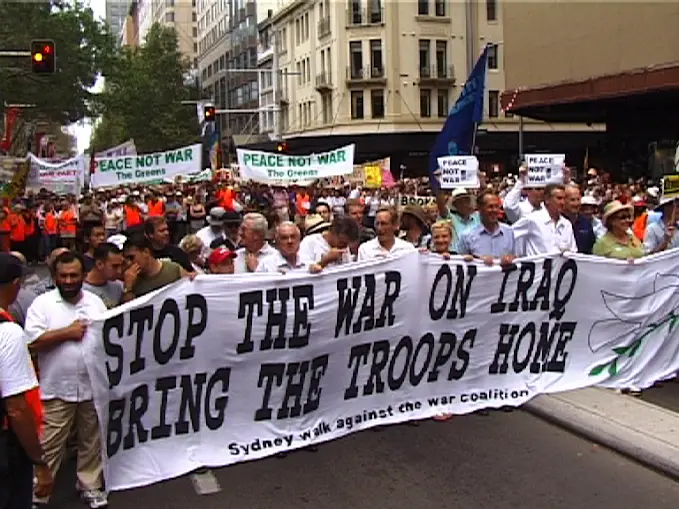
The limits of these protests provoked deep reflection on social change strategy, leading Amanda to undertake a PhD on Coalition Unionism. She decided to move to North America to undertake research, and used the opportunity to meet as many different kinds of change makers as possible. Having read Saul Alinsky’s books Reveille for Radicals and Rules for Radicals she approached the Industrial Areas Foundation (IAF), and a meeting with Mike Gecan led to National Training, planting the seeds to bring community organising to Australia.
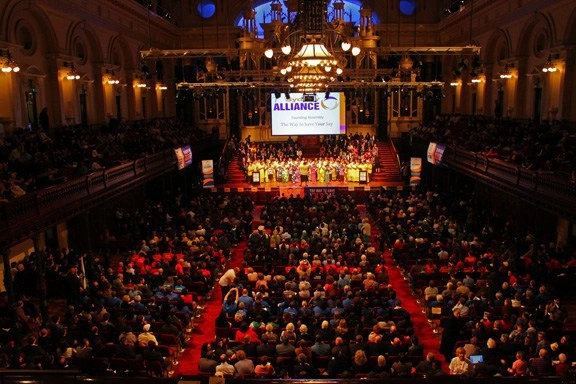
In 2007, Amanda returned to Sydney and with the support of Unions NSW, Joe Chrastil from the IAF and Jennifer Acklin as the first organiser, she began to canvas and explore if other civil society organisations were interested in building the Sydney Alliance. The process continued and escalated over four years, where Amanda also had two children. The Alliance was founded on 15 September 2011 attended by more than 2000 people at Sydney Town Hall.
In 2015, Amanda had a second psychosis and in February 2016 it led to her being “made redundant” by the Alliance. Thankfully, she has been exploring the possibilities of returning to research as a way to reflect on social change strategy, and in 2017 she began a postdoctoral fellow on Organising the City at the University of Sydney.
In 2017 Amanda also began the ChangeMakers Podcast to share stories and lessons about social change. The podcast sought to aggregate insights and lessons from across different movements, modes and places, making it easier for people to learn and share ways to make a difference. Initially, the podcast featured long form non-narrative accounts of campaigns that were frequently undertaken through field trips to places like South Africa, Kenya, Thailand, Hong Kong, Russia, Barcelona and Uganda. Later the podcast focused on interviews with people making change.
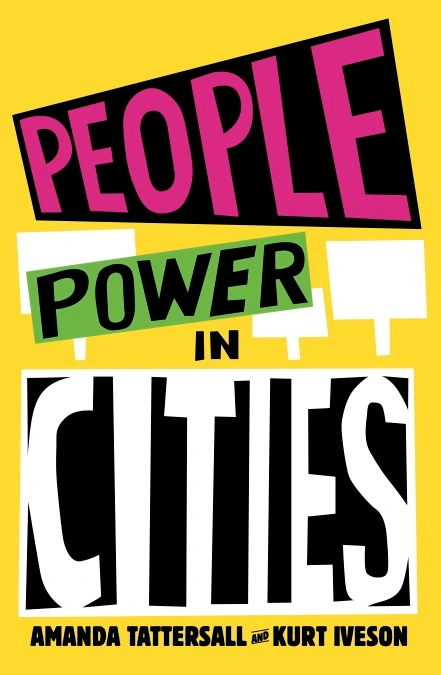
With Kurt Iveson, Amanda’s postdoctoral research led to People Power in Cities (Oxford University Press, 2026), that documents different “people power strategies” such as playing by the rules, mobilising, organising, prefiguring and running for office across cities such as Cape Town, Austin, Hong Kong, Sydney and Barcelona. It argues against the idea that one strategy can be a silver bullet, calling instead for an ecology of people power that supports diversity of strategies to maximise adaptive capacity for making change.
Initially supported by the Sydney Policy Lab under the then Director Marc Stears, Amanda initiated the Real Deal for Australia project that seeks to use community organising as a research method to support community-led policies during climate transition. Supported by a staff team including Elise Ganley, Sal Fisher, Lian Sinclair and Sam Wilkins and community alliances including Real Deal Geelong, Sydney Alliance, Queensland Community Alliance and Hunter Community Alliance, this work has led to major research projects attracting over $2 million, including an ARC Discovery Grant (on Just Transmission with Jonathan Grant, Madeline Taylor and David Schlosberg). The project has pioneered community-led policy strategies that advance a ground-up approach to climate transition, while securing meaningful improvements in areas such as housing and transport.
From 2023, Amanda has worked with Citizens UK on the Organising Together across Difference project. This led to the documentation and development of new community organising strategies, such as Weaving Trusts and Relational Experiments, to respond to heightened polarisation. These approaches have underwritten and spread nationwide as part of Citizen UK’s community leadership in the years since.
This community-engaged research led Amanda to work with Marc Stears and coin the Relational Method, applying and translating the methodology of community organising to co-design and community-engaged research methods. This work has generated high-impact publications, delivered programs that have trained more than 2000 academic and professional staff at the University of Sydney, and supported projects and academics across Australia and the UK through mentoring. It also led Amanda to join the leadership team of the inaugural global Community Organizing Journal.
Conscious Tribes represents a coming together of two parts of Amanda’s life: stepping back into her roots as a change maker while honouring the 10 years she has spent researching and reflecting on social change. What remains constant is her desire to make a difference. What has changed is that, in this book, she is no longer trying to lead from the front by building a new organisation or heralding a new idea. Here, the difference she seeks to make is helping others make a difference.
For more on Amanda’s work see her website.