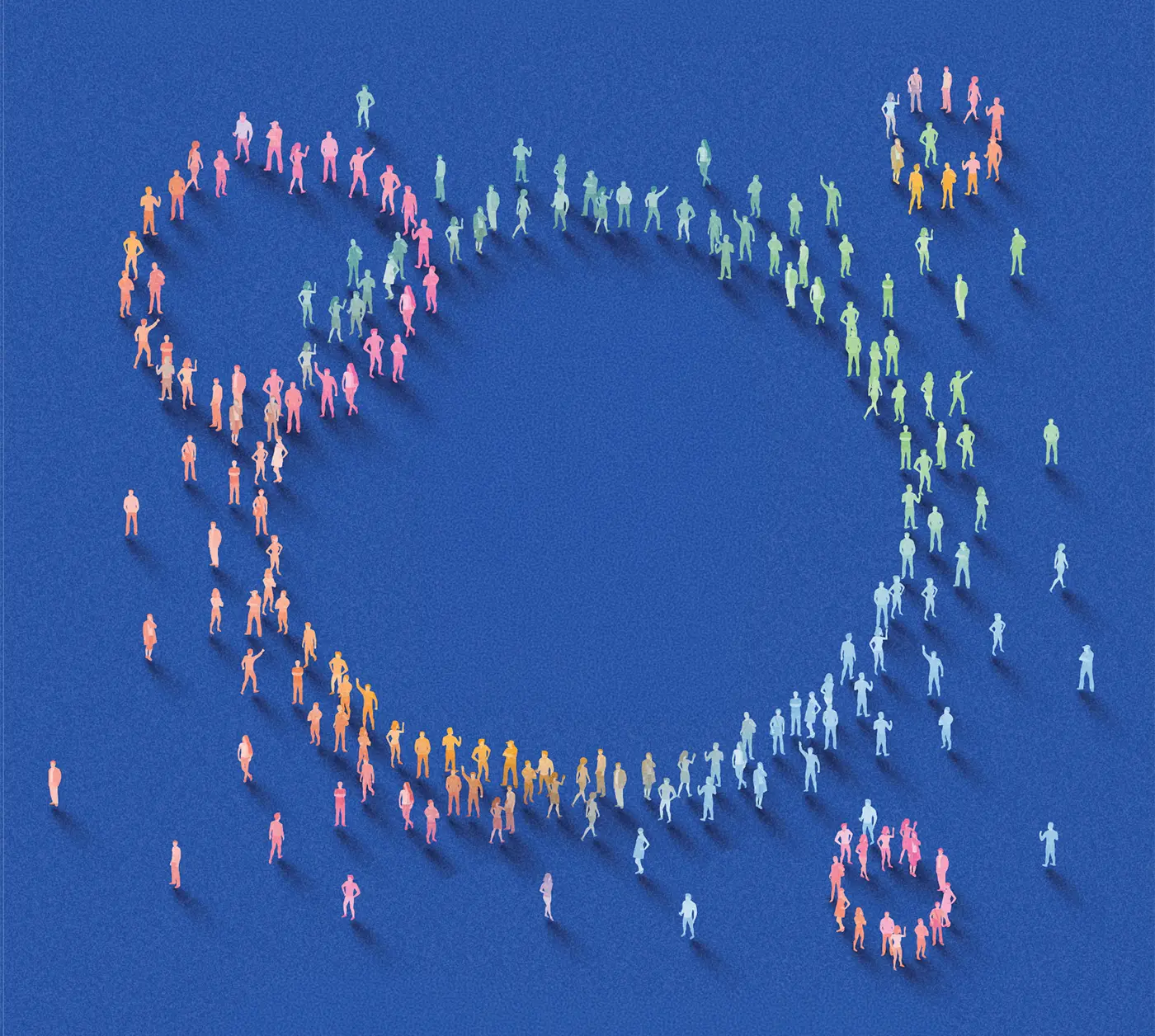
Sameness and Difference
Sameness helps us act together; difference helps us recognise who we are, who others are and what needs to change.
On this page:
|
|
|
|
|
|

The paradox
Sameness and difference are often treated as opposites: either we focus on what we share, or we emphasise what sets us apart. But if we want to build power with others, we need both.
Sameness gives people enough common ground to act together. Difference reminds us that people are not interchangeable. It reveals distinct experiences, unequal treatment, and different ways of seeing, knowing and acting.
Without sameness, people can remain isolated or fragmented. Without difference, unity can become shallow, coercive or false. Tribes need both: enough sameness to act together, and enough openness to difference to avoid flattening who we are and to keep that action responsive and real.
The challenge is not to overcome difference or dissolve ourselves into sameness, but to hold them in tension: building enough common ground to act together while staying open to what makes each of us distinct.
The shape of the paradox:
Sameness builds power with others when it makes space for difference.

What needs rethinking?
Rethinking sameness and difference means refusing to separate them. Difference is not only big but also small. It is not fixed, but shaped by context, experience and relationship. Some differences are punished in public life, but difference is not something only some people have. We are all different.
Sameness is not the opposite of difference. We can build common ground while still honouring what makes people distinct. The challenge is to build enough common ground to act together without erasing those differences — recognising that difference can strengthen our tribes by bringing new ideas, new skills, new experiences, and new ways of seeing.
We can see difference as a problem, as a threat, or as something to fix. People get reduced to categories, judged too quickly, or seen as too unlike us to relate to. We see this in the rising polarisation of public life where people marked as “different” — like refugees or migrants of colour — are cast as a threat. But it also happens in our tribes, when different experiences, opinions or ways of working are judged as disruptive rather than as part of the work.
Sameness is necessary for us to act with others, but when sameness becomes uniformity it can flatten complexity, silence difference and create exclusion. Treating everyone “the same” can become a way of exercising power over others when it refuses to recognise what people actually need. This is why people have fought for differences to be recognised in public life: disabled people fighting for accessible public buildings, or women fighting for parental leave.
Tribes can also avoid difference by building sameness too narrowly, choosing to work only with “people like us”. When that narrowness shapes both the tribe and how it relates beyond its boundaries, the result is often a culture more concerned with correctness and agreement than with building power.
Big differences like race, gender, class, disability or sexuality matter deeply and shape how public life treats us. But no single difference defines us completely. Difference is big and small, layered, and changing over time. When we treat difference as fixed — as something we possess rather than something we live — it can simplify people and make relationships harder to build.
Connections across the map

Big and small
Sameness and difference are both big and small: shaped by large public forces, histories and narratives, and by the smaller, layered experiences that make each person distinct.

Public and private
Our private differences are shaped by public life, including which differences are recognised, accommodated, marginalised or turned into grounds for solidarity.

Us and Others
Tribes are built through sameness, but how they hold difference within and beyond their boundaries shapes the power they can build.
Power Over and Power With
Sameness can build power with others, but it can become power over when difference is erased, ranked or controlled.

Curiosity and Judgement
Curiosity helps us stay open to both sameness and difference in relationship, while judgement shapes our sense of self and who we are willing to relate to, work with or challenge.

Action and Reflection
Action tests how well a tribe holds sameness and difference as it uses its power; reflection helps us notice what differences may have been missed and what we are learning about ourselves and each other.
Acting consciously
Sameness and difference are not fixed states. They are more like verbs, enacted through how we live, relate and act.
Our differences are layered and changing. Big differences like race, gender or ability have real consequences, shaping how public life treats us and how we move through the world. But no single difference defines us completely. Difference can look like a stained-glass window: one picture made from many smaller, distinct pieces. Or even better, like a kaleidoscope, whose colours and shapes change as we move through life.
Sameness is also something we do. Instead of seeing belonging as something only found with “people like us”, we can see sameness as the kind of connection that can be built through relationship. Being open to our own complexity and the complexity of others helps us avoid reducing people to a single category, keeps our curiosity open, and tempers judgement — especially with people we might otherwise be disinclined to connect with.
Acting consciously means resisting the urge to close over difference too quickly. When we meet people one-to-one, don’t rush to declare “we’re the same”, or treat similar experiences like a game of snap used to prove connection. At the same time, don’t foreclose on the possibility of sameness. Don’t rush to assume “we have nothing in common” either.
Relating to someone is different from identifying with them. We flatten difference when we collapse another person’s story into our own, try to match their experience, or try to solve their “problems”. Relating means staying present to what is distinct in another person while remaining open to the possibility of connection.
Every tribe is full of difference. Disagreement is not failure; it is often a sign that people are working across real difference rather than pretending it is not there.
The boundaries that give a tribe its sameness are not a problem in themselves. The task is to be conscious of them: to ask whether they are working, whether they are just, and who or what they might be excluding. A tribe that avoids these questions can become too comfortable, too self-contained, or more concerned with agreement than with building power across difference.
Building tribes that can hold difference means creating relational practices that help people stay in relationship through disagreement, make space for different experiences, and accept the limits of what any one tribe can hold. In practice this can look like: giving people language for discomfort and disagreement; paying attention to whose experiences are shaping what the tribe does; holding people accountable through relationship rather than through public shaming; and building opportunities for people to meet and build trust before conflict or crisis arrives.
When tribes lean too heavily on sameness, they can become more concerned with agreement and being right than with building power. Acting consciously means recognising that difference and discomfort can make room for learning, and finding ways to challenge harm and hold people accountable without closing down the possibility of change.
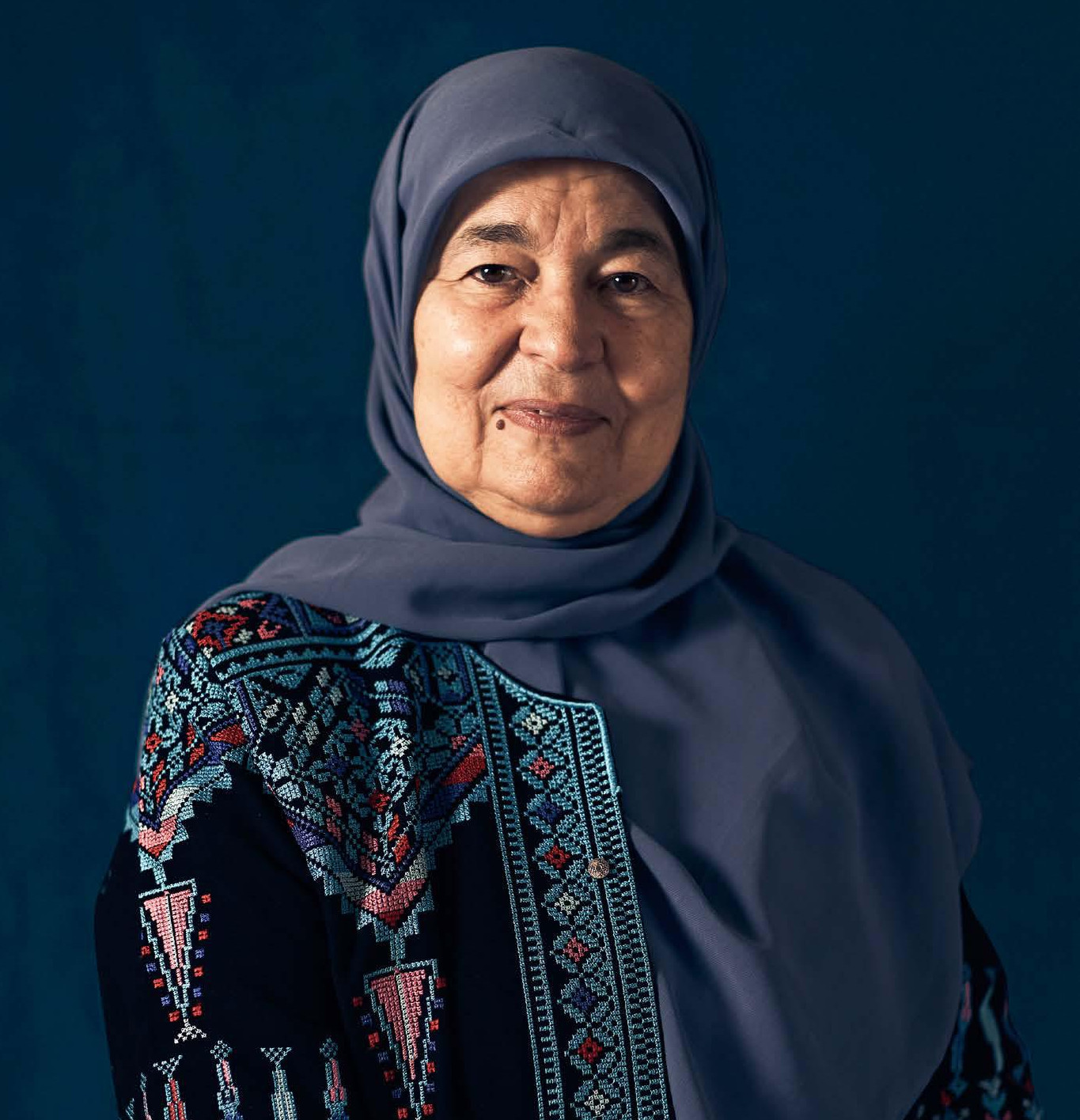
Maha Abdo and the Sydney Alliance
Maha’s story shows that difference does not disappear when people act together.
Questions to Sit With
Sitting in the tension
- What happens when you think of who you are, and what makes you different, as layered, changing and made up of both big and small differences?
- What becomes possible when you think of sameness and difference not as things we have, but as things we do?
- Where in your life have you felt tension between wanting sameness and needing difference to be recognised?
- When have you experienced difference as something that created distance, and when has it opened up the possibility of connection?
Navigating sameness and difference in your practice
- What is shared in your tribe — purpose, background, values, experiences? What is consciously built, and what is simply assumed?
- What differences exist in your tribe that are named, and which remain in the background?
- What boundaries shape who belongs in your tribe, and how easy is it for new people to enter?
- What happens when disagreement emerges? Is it seen as a threat, a surprise, or a normal part of working across difference?
- How does power shape the way your tribe holds sameness and difference? Whose voices are heard, and whose are ignored?
From the book
Maha’s story shows that difference does not disappear when we act together; in fact, it becomes more visible. When it comes to trying to make change, the problem is not difference itself but the perception that it is a barrier instead of a bridge. The paradox of sameness and difference offers a way of rethinking our approach to public life — showing that our challenge is not about overcoming difference, but rather learning how to hold it in tension with sameness. This way of thinking treats who we are — and what makes us different — as dynamic rather than fixed, made up of both big and small differences, and shaped through relationship and action.
Putting it into practice
Tool TBC
Tool TBC