
Big and Small
Making a difference is never just big or small. It depends on how we connect power and relationships.
On this page:
|
|
|
|
|
|

The paradox
We often picture making a difference as the work of heroes like Martin Luther King Jr, or moments of mass protest that shift history. But that picture is misleading. It overlooks the smaller work that makes change possible: the relationships we build, the trust we form, and the first steps behind every act of big change.
Big and small are not just about the scale of change we seek. They point to different dimensions of what makes change possible. Big speaks to power: the larger forces, institutions and decisions behind the problems we face. Small speaks to relationships: how we build enough connection and commitment to act with others.
We need both. Without strong relationships, a tribe’s ambition to take on powerful adversaries can falter. Without attention to power, even strong relationships can leave the forces shaping people’s lives untouched. Big change is built through smaller actions and relationships; small change is always shaped by wider power dynamics.
Most of us have an instinctive preference for either big or small. But the question is not which one is better. It is what mix is needed now. This paradox reminds us that making a difference means navigating between different priorities and practices. Agency is not simply the right to act, but the responsibility to decide how.
The shape of the paradox:
Big change and small change are not separate. Each depends on the other.

What needs rethinking?
What needs rethinking is not which scale matters more, but how they work together. Small relationships, actions and wins may be less visible, but they are how change begins and builds. Attention to power is what allows that change to reach beyond itself, scale and endure.
Big and small also remind us that making a difference can’t be done alone. It depends on others: the relationships we form and the power we build together. This is the work of tribes, where small acts of connection come together with a shared effort to shift the forces shaping our lives.
We often treat big change as what matters most, with small change as less significant.
This drives us to look to larger-than-life figures — heroes like Gandhi, political leaders, major campaigns or powerful institutions — and to see making a difference as something beyond our reach. It can breed passivity, where “small” people like us feel we have little role to play. It can also place too much weight on leaders and campaigns, turning them into saviours and making it harder to hold them accountable as human.
When we overvalue the big, we can narrow our attention to outcomes and neglect the process: how change is actually made through relationships, trust, preparation and repeated small acts.
We can also retreat to the small, turning to what feels close to us. This can take the form of inner work, self-discipline or a commitment to “try harder”. It can also extend to the relationships we already have — with friends, family, or people at work or in our communities. These things matter. But when small action stays confined to comfort rather than engaging power, it leaves the wider forces shaping our lives untouched. Strong relationships may sustain us, but on their own they struggle to shift the conditions that produce injustice.
Taken alone, the small can leave us active but contained: working around problems rather than changing them.
Connections across the map

Public and private
Big public forces shape private lives; small personal experiences can become the bridge into public action.

Us and Others
Tribes can be small or big. Big thinking about power helps them decide who they build relationships with, inside and beyond their boundaries.

Power Over and Power With
Big helps us understand and reshape power dynamics. Small is where we build power with others.

Curiosity and Judgement
Big shows how our views are shaped by experience and power; small creates space for those views to be tested and changed.

Sameness and Difference
Big histories shape how we see difference and imagine sameness. Small relationships are where we learn how to live, relate, negotiate and act across them.

Action and Reflection
Big tends toward visible action. Small grounds action in relationship and reflection.
Acting consciously
Size does matter — and the small work of relationships is vital. How we relate, how our tribes function, how our meetings unfold, how decisions are made: these often hidden dynamics build our capacity and generate our power. Working across difference depends on small qualitative skills as much as larger numbers. Valuing the small also means valuing ourselves and how we use our agency when we act.
But the small only makes sense when it stays connected to the big. Relationships are not an end in themselves. They matter because they help us shape public life.
Making a difference at scale is not the same as scaling a brand. Social change does not need to happen everywhere to matter. Big change can be built through many small efforts that are connected, repeated and organised. It can also be won in strategic places where local action has wider effects. Big problems often have small entry points.
Big and small make clear that relationships and power are inseparable. Relational meetings create the foundation of power, but they need to be built strategically through an analysis of power. Stories can connect lived experience to larger public pressures. Large actions can be designed to deepen relationships, not simply gather anonymous participants. Tribes may choose to work at different scales in different seasons, or partner with others whose strengths complement their own. Acting consciously means knowing when to invest in relationships, when to confront power directly, and how to connect the two.
GetUp and the Sydney Alliance
GetUp and the Sydney Alliance taught me that big and small are not competing theories of change so much as different ways of working, each with its own strengths, values and blind spots.
Questions to sit with
Sitting in the tension
- What do you make of the idea that big and small are connected?
- What tensions arise between power and relationships in practice? What makes holding them together difficult?
- Where have you seen small actions shape big outcomes — or big ambitions falter without attention to the small?
- In your experience, what makes it hard to move between big and small?
Navigating big and small in your practice
- Do you have a preference for big or small? Where do you think that comes from?
- When has that preference served you well, and what trade-offs has it brought?
- How do you respond to people or groups with a different instinct about big and small?
- What would it look like to approach big and small differently in your tribe, and in how you act to influence public life?
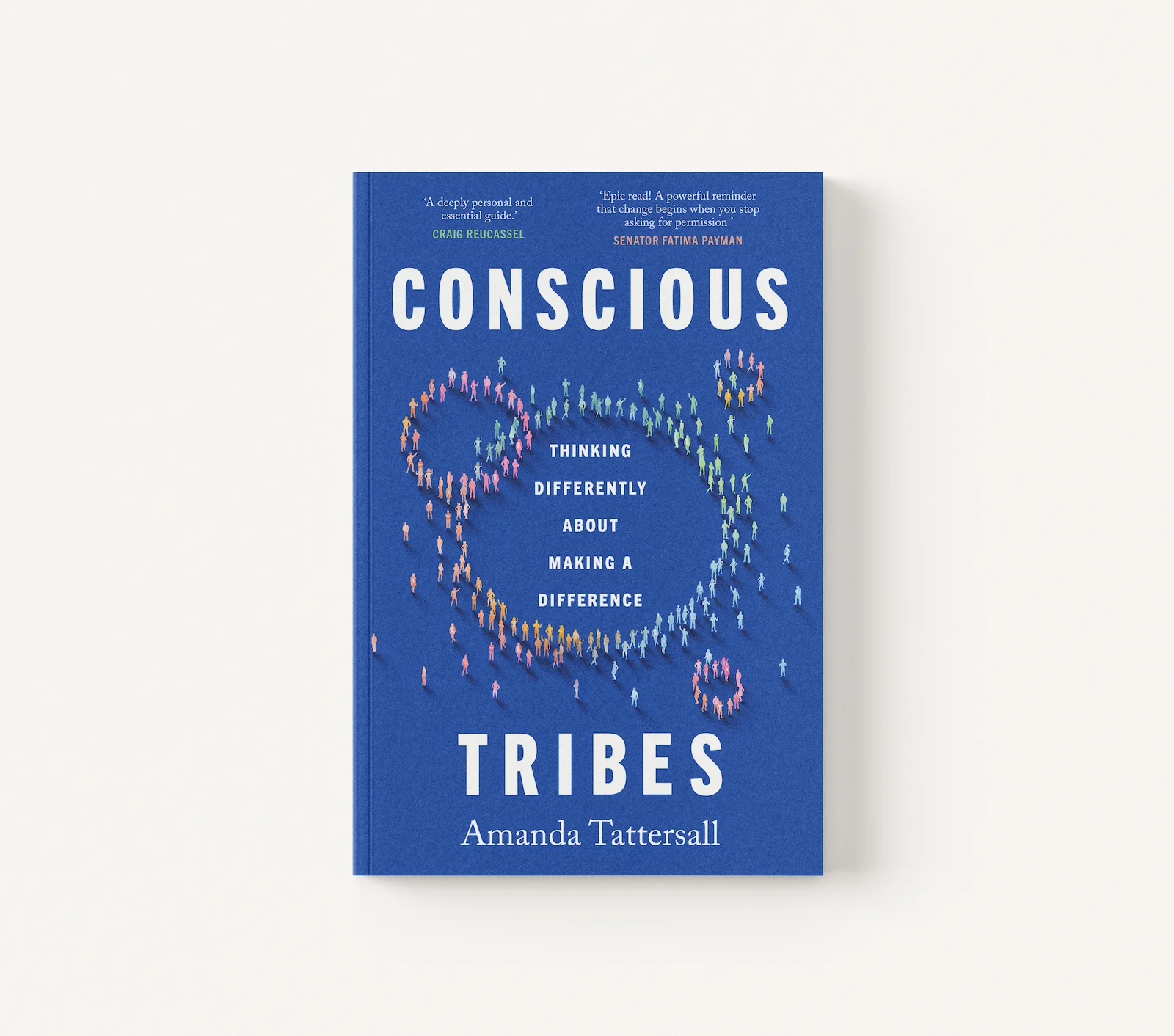
From the book
When we think about making a difference, we tend to frame it in either big or small terms. The big story tells us that change is about confronting huge injustices and leaving a mark on the world out there. But making a difference is also something more modest: the small impacts we can have in our workplaces, our schools, our neighbourhoods and our homes. Too often, the big story crowds out the small one. Yet big and small are not separate planes. Big change is made up of repeated acts of smaller change, and small acts matter most when they connect to larger forces.
Putting it into practice
One-to-One Challenge: Exploring How Others Navigate Big and Small
A reflective practice
Commit to five one-to-one meetings with people in groups who approach the tension between big and small differently from you. Choose people you are curious about given your passions and tribe, and be prepared to explain why you are interested in them — drawing on your own experiences, stories and concerns.
The intention is to explore how others balance big and small forms of change, and to learn how this tension can be navigated in different ways. These conversations can help loosen fixed preferences, and reveal how our instincts about big and small are shaped by past experience — and how they can shift.
Online Training: Relational Meetings
Lorem ipsum is placeholder text commonly used in the graphic, print, and publishing industries for previewing layouts and visual mockups.
Online Training: Power Analysis
Lorem ipsum is placeholder text commonly used in the graphic, print, and publishing industries for previewing layouts and visual mockups.