By Amanda
You don’t need to be active in a tribe or see yourself as someone that wants to “make a difference” to be enriched by this book. I am hopeful that it has something to offer just about everyone.
For established book clubs, I have put together this “guide” to make it easy to engage with Conscious Tribes. In doing so, the suggestions are a way of demonstrating how some of the book’s ideas and arguments can be used to frame a discussion about its contents. Indeed, the book might offer some food for thought for how you run your book club!
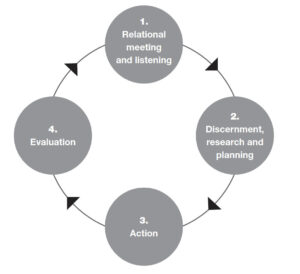
The guide provides a range of suggestions for running a conversation. The structure it outlines moves from relationships and story, to digestion and interpretation, to action and evaluation. In doing so, it applies the “Organising Lifecycle” that is mentioned in Chapter 3.
It invites you to start by getting people to share a story – suggesting three questions that encourage people to reflect on the public dimensions of their private lives (and the public-private paradox in Chapter 2).
Towards the end of the conversation it turns to “action” – but in a very open and exploratory way – inviting people to think about how the discussion and their own reflection might be encouraging them to do something differently.
I also encourage you as the organiser to think of the conversation a little bit like an action – and plan it with one or two others in the group – and evaluate it after.
I’d love to hear from Book Clubs about how the discussion went – the guide includes an email address and links to my socials, please take a photo and send over a note. And if you have ideas or suggestions for what others could do better or differently, let me know that too and I’ll update the guide!